
• Choose this day whom you will serve…

    I was reading the Prodigal Son’s story and there was something the eldest brother said that I resonated with.

    At the end, the eldest son is upset at the celebration that the disobedient son is getting. And he makes a comment to his father… I stayed here. I was obedient. I didn’t refuse your commands.

    Luke 15:29 esv– but he answered his father,

    ‘Look, these many years I have served you, and I never disobeyed your command, yet you never gave me a young goat, that I might celebrate with my friends…

    And something about that kind of made me pause…

    Why aren’t the obedient celebrated?

    We who are saved choose obedience each day. To pick up our cross daily, to fight against our flesh, to put on that suit of armor, to live a life to glorify God.

    Why isn’t that celebrated.

    Obedience is a hardship. Especially because that obedience is to someone other than yourself. Being obedient isn’t easy– because if it was, the Prodigal Son wouldn’t have left. He left because he wanted something other than what his father was giving him. He wanted to live life in accordance or rather, obedience to himself.

    And obedience isn’t always fair and isn’t selective. You don’t get to abide by the commandments you like or follow the instructions that feel achievable or serve you best. Obedience is a choice to listen, abide, to agree in following the instructions of someone that is a figurehead or authority.

    Someone who’s rules or expectations impact you and your preference or comfort.

    So, to do every command, to work tirelessly, to till and be apart of raising that fatted calf – to have chosen obedience – then watch as a celebration for the disobedient happens, is frustrating.

    Because obedience feels like there should be an immediate reward. Because it seems that not everyone is required to have the same responsibility or requirement of obedience. It sometimes seems like those who give the bare minimum are the ones with abundance.

    As if a constant pat on the head is given to those who rebel so completely and yet the ones who are struggling in obedience get more ‘punishment’.

    I fall into this trap consistently and almost carelessly because I will look to those who honestly, from my perspective – which is the key factor in my wrongful conclusion – aren’t within any means of obedience. In fact, there is outright defiance – but they don’t seem to struggle, they don’t seem to lack. It’s almost like they flourish with God in their sin outrightly.

    I’ll hit that self imposed check list, because becoming legalistic can cloud the concept of obedience to God. I’ve read my bible, I’ve prayed, I was loving to my neighbour – where is my gold star Lord?

    But my threshold of obedience isn’t the determining or deciding factor.

    There’s a verse in 1 Samuel 15:22 esv;

    And Samuel said,
    “Has the LORD as great delight in burnt offerings and sacrifices,
    as in obeying the voice of the LORD?
    Behold, to obey is better than sacrifice,
    and to listen than the fat of rams.

    To obey is better than sacrifice…

    The sin uncommitted, because the willfulness of sin was overcome by the desire to obey. Therefore, the sacrifice would not be necessary.

    Obedience is something that is chosen out of love, out of respect, out of reverence – not out of expectation of reward.

    In Luke 17, Jesus gives the parable of a servant and makes this point about obedience.

    Luke 10:10 esv

    So you also, when you have done all that you were commanded say, ‘We are unworthy servants;

    We have only done what was our duty.’

    Obedience is our duty to the Lord. Because the salvation we receive is solely because of His grace, His sacrifice, the shedding of His blood. It is given not earned.

    Blessings are gifts…not payment.

    Not that there isn’t reward – but our reward is in heaven. And the Lord tells us not to amass our treasures here on earth but in heaven.

    Perhaps, the eldest forgot that he helped build his inheritance through his obedience.

    The Prodigal Son is meant to be a parable of the celebration, the delight in the return of the disobedient son, who returned to obedience. And we who come to Christ, were once the Prodigal Son, having received the celebration of the fatted calf; who now have the chance to celebrate in the return of other sons and daughters coming home. We all get to be the older, responsible brother and instead of being angry that our obedience isn’t being celebrated – instead celebrate that someone else answered the call into obedience.
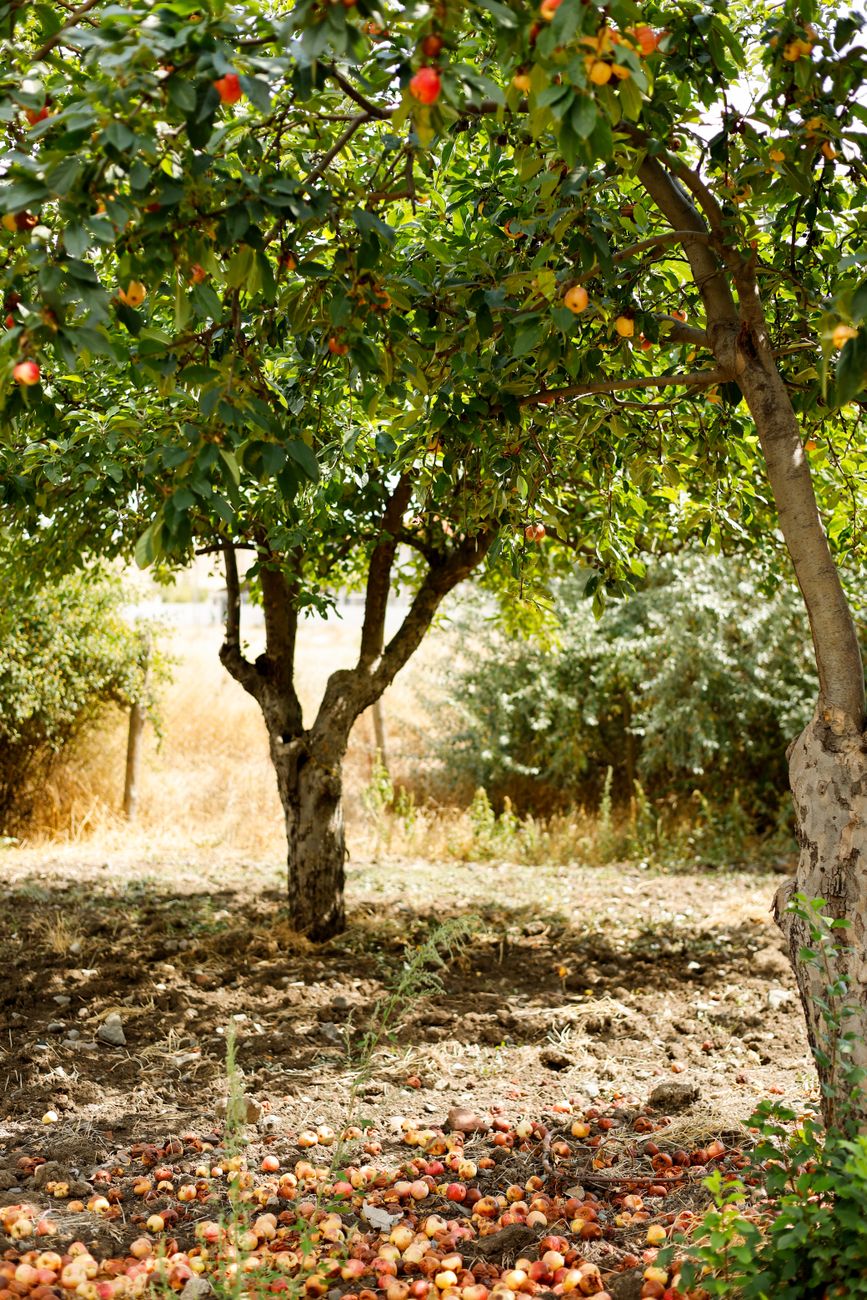

  • Eve was tempted by ONE tree…

    Let’s get back to the garden.

    God has since made the universe and saw that it was good. Now He has made Adam, and the first warning has been passed;

    And the Lord God commanded the man, saying, “You may surely eat of every tree of the garden, but of the tree of knowledge of good and evil you shall not eat, for in the day that you eat of it you shall surely die.”

    Genesis 2:16-17 esv

    Side note – I hear a lot of people calling this the Tree of Knowledge but the very distinction of it being of good and evil is imperative to the actual importance of the tree. Because God did not make Adam and Eve dumb. Adam named all the animals prior to the eating of the fruit, and we aren’t out here calling things flap flap thing one and two, or moo chaw big and small.

    Side rant done, back to…

    God shared that with Adam, then proceeds to make Eve.

    Tah dah – man has his help mate.

    So, while out and about within the garden the serpent slides on up to Eve, “Hey girl – I know that God has forbade you from participating in something that He didn’t explain to you, because He knows it’s for your own good. What was it?” We are quoting his intentions. His precise luring,

    Now the serpent was more crafty than any other beast of the field that the Lord God had made. He said to the woman, “Did God actually say, You shall not eat of any tree in the garden?”

    Genesis 3:1 esv

    Eve makes no pause and immediately informs the serpent. “Oh yeah. We have been given such an instruction.” Her exact declaration;

    And the woman said to the serpent, “We may eat of the fruit of the trees in the garden, but God said, ‘You shall not eat of the fruit of the tree that is in the midst of the garden, neither shall you touch it, lest you die.”

    Genesis 3:2-3 esv

    But Eve adds onto the original instruction given to Adam. Initially, “Do not eat” became “Do not eat or touch the fruit.”

    But we don’t know where Eve got this idea from. If Adam had told her this to implore the importance of avoiding it, or if she added it on to protect herself. But we can declare that she understood the threat of death that came from the fruit.

    Her fear was in the fruit, not the Lord.

    Her self-interpretation of the warning led her astray. Because the moment the serpent poked a hole in it, she was willing to wander. Her foundation wasn’t in the reverence of God, because the moment she was told “don’t worry – you won’t die” her real concern was exposed.

    She didn’t fear God, she feared death.

    Now, Eve hearing what she believes to be a reasonable argument for eating the fruit – that one she won’t die, but two will be made wise in the knowledge of good and evil – like gods. She even took a moment of contemplation; in verse six she lists the reasons why it’s okay to eat the fruit. Pleasant to look at, good for food, would make one wise – checking all of these boxes, but none of these reasons was “What did God command?”

    That wasn’t a reason nor even a thought when Eve was in her debate about giving into her temptation to have what her heart was yearning for.

    There is accountability that needs to be taken on our part when it comes to the participation we have in sin because the things we need to note here is that the serpent was suggestive, beguiling, he was manipulative and encouraged her to sin.

    But he himself did not eat the fruit.

    Eve listening to the temptation wasn’t wrong, but it was her acting upon that temptation that was wrong.

    The serpent did not bite the fruit and baby bird it to Eve. The serpent did not hear her state we can’t eat it or touch it and then shove it down her throat. He did not take her hands, pick the fruit, and puppeteer her into eating the apple.

    It was Eve’s decision.

    It is our decision.

    There’s also this fascinating part of the story where, we don’t know where Eve is when this interaction with the serpent occurs. We aren’t told if she is in the midst of the garden or on the outskirts. She may have been avoiding that tree. But if she was already in the midst of the garden, Eve was found circling her temptation, but if she was on the outskirts of the garden, it means she went to her temptation.

    It reminds me of the verse in 1 Peter 5:8 esv

    Your adversary the devil prowls around like a roaring lion, seeking someone to devour.

    Both Adam and Eve had the possibility of preventative measures. If they were willing to add onto the instruction, then perhaps the following actions could have taken place.

    Why didn’t they fence it off?

    Why didn’t they cut it down?

    Why didn’t they pick the fruit and burn it?

    It was in the midst of the garden – therefore there was more garden to be picking fruit from.

    And we must include Adam in this because in verse 6 tells us,

    So when the woman saw that the tree was good for food, and that it was a delight to the eyes, and that the tree was to be desired to make one wise, she took of its fruit and ate, and she also gave some to her husband WHO WAS WITH HER, and he ate.

    Genesis 3:6 esv

    The decision was made by Adam and Eve to eat the fruit.

    But the blame was passed from Adam to Eve to the serpent. The responsibility and the accountability of their actions were placed on Adam and Eve – because they were the ones who committed the act.

    It seems to me that there is a lot of passing the buck in Christianity now. That we don’t own our own sins, that we don’t recognize the participation we have within our own actions. We want to blame a generational curse, or self declared spiritual warfare. (Spiritual warfare is incredibly real, but when it is used to pardon actions or make excuse of your own poor decisions – then it’s not spiritual warfare.)

    The only curse we suffer from, is the curse of sin.

    So, it would appear that the idea of “it wasn’t my fault” has stemmed from the garden as well.

  • we’re reading about Jephthah’s vow…

    I remember the first time I read Judges 11, and my initial horror in reading it. I was stunned in fact battling between having read it wrong or misinterpreting because I could not grapple with the ending.

    But when I began to ask the right questions, it helped me to understand.

    Let’s take it from the top.

    Firstly; Jephthah – the vow maker. An illegitimate child, born of a woman of ill repute to which the rest of the family was not accepting of. However, despite the family and people’s determination of his lack of worth and therefore banishes him, the Lord determined how useful and faithful he was. He would be the one that was going to defend Gilead from the children of Ammon that were making their way, aggressively, and settling into Gilead. (Brief overview…barely a synopsis. Please go read Judges Chapter 11.)

    Jephthah, after being dragged back to Gilead basically lays it on the line – I fight the Ammonites, you will make me your head. And everyone nods and agrees exuberantly. Jephthah turns to the Ammonites, gives kind of a “You better cool it” warning to which they do not abide.

    So, Jephthah, rumble ready, makes a vow to God before the battle.

    “Then it shall be, that whatsoever cometh forth of the doors of my house to meet me, when I return in peace from the children of Ammon, shall surely be the LORD’S, and I will offer it up for a burnt offering” (verse 31)

    So, two verses later, Jephthah is declared the victor, the Lord having accepted the vow that he’s made. The children of Ammon had been given into his hands. “A great slaughter”, the verse tells us. He’s riding home victorious; and as the door opens,

    “behold, his daughter came out to meet him with timbrels and with dances: and she was his only child; beside her he had neither son nor daughter.” (verse 34)

    His vow to God required his daughter.

    His only daughter.

    He collapses to his knees, tears his clothes at the realization of what will be his burnt offering. Not just his only daughter – his only child. He laments, cries out to her about the vow he’s made to the Lord.

    It’s her response that tells of a faithful and knowledgeable daughter:

    “And she said unto him, My father, if thou hast opened thy mouth unto the LORD, do to me according to that which hath proceeded out of thy mouth; forasmuch as the LORD hath taken vengeance for thee of thine enemies, even of the children of Ammon.” (verse 36).

    No crying. No refusal. No questioning. Simply an understanding that what is vowed to the Lord, is owed to the Lord. A woman, young; with her entire life ahead of her is willing to ensure that her father keeps his word to the Lord.

    But she makes one request of him – to let her go into the mountains to mourn her virginity.

    Jephthah allows her mountain mourning, and for two months she and her companions bewail her virginity. And just as she promised, she returns so that her father can keep his vow to the Lord.

    When I first read this, I was a little gut punched and surprised that the burnt offering went through. I was waiting for the Lord to give it a pass. I was waiting for a lesson to be taught to Jephthah, but the story ends so abruptly. I honestly paused and thought, “God wouldn’t.” But then remembered to seek His intention and not my interpretation. So, I start asking the right questions.

    Why?

    First the vow.

    In Numbers 30:2, the conditions of a vow are stated;

    “If a man vow a vow unto the LORD, or swear an oath to bind his soul with a bond; he shall not break his word, he shall do according to all that proceedeth out of his mouth”.

    Jephthah makes that vow and very obviously intends to keep it. It’s the second instruction he did not adhere to.

    “When thou shalt vow a vow unto the LORD thy God, thou shalt not slack to pay it: for the LORD thy God will surely require it of thee; and it would be sin in thee”. (Deuteronomy 23:21)

    To give oomph to the importance of immediacy, a warning is given in Ecclesiastes 5:4

    “When you vow a vow to God, do not delay paying it, for he has no pleasure in fools. Pay what you vow.”

    Jephthah delayed his payment of vow, and it made me wonder…did Jephthah miss the chance to spare his daughter – could he have given the Lord the chance to save her.

    I then examined Jephthah’s own wording of his vow – the first thing to pass through the door. Jephthah didn’t offer his daughter for sacrifice – but he forgot that everything he had, was God’s. Therefore, God could ask for it. His vow was broad, the request specific.

    Ecclesiastes 5:2 warns us about being rash with our mouth;

    “Be not rash with your mouth, nor let your heart be hasty to utter a word before God, for God is in heaven and you are on earth. Therefore let your words be few.”

    Jephthah offered God anything – presuming it wouldn’t really apply to everything.

    But even despite Jephthah being rash in his vow, and the delay of fulfilment; in Hebrews 11:32 he is still counted as faithful.

    Then the last question – was the vow even necessary?

    Remember when David did the census to count his great army, putting his faith in the strength and number of his men instead of trusting in the Lord to win his battles.

    It made me think – did Jephthah trust the Lord in battle? Why did he need to make a vow in the first place? Why didn’t he ask for God’s favour in the battle instead of making a vow? Was it the promise of becoming the head over Gilead against the people who mistreated and banished him influencing him? Was vindication more important?

    But while Jephthah is still considered faithful, what about his daughter.

    She stands before her father, learning of his vow made to God (while it doesn’t seem to be declared that the vow involved a burnt offering, it can be concluded that she did understand that the vow involved her and her future), and her response isn’t anger, it isn’t tears or betrayal, no refusal, no demand for him to take it back. Instead, her response honours her father, so that he can honour his vow to the Lord.

    And essentially, she too makes a promise to her father to return in two months and does – she didn’t delay. She didn’t stay an extra month. She didn’t use the time to run away and hide. In those two months, she didn’t spend anytime coming up with some scheme, nor did she change her mind.

    She kept her “vow” and returned in 2 months to let her father fulfill his vow.

    Verse 40 states “the daughters of Israel went yearly to lament the daughter of Jephthah the Gileadite four days in a year.” (Now before you get too excited and see the word “lament” and start to generate and brew, if I could point you in the direction of what the Hebrew definition means https://blb.sc/00Effd.)

    Alright. No vow making from me.

    Read your bible. Know the Word.

  • Martha, Martha…

    Martha chose the expectation…Mary chose the necessity.

    While a lot of us want to see ourselves as Mary – the truth is… we’re a bunch of Martha’s.

    (more…)